
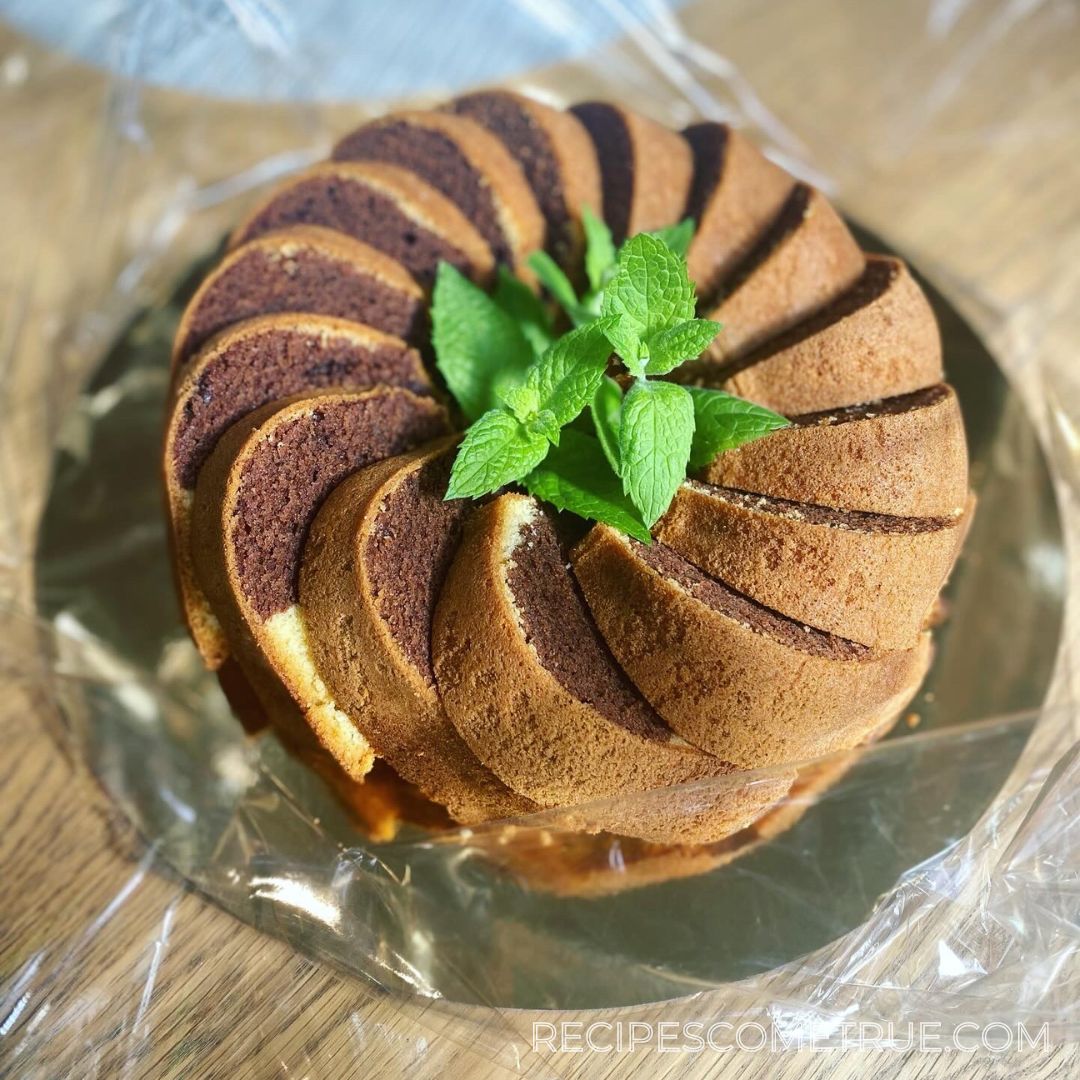
A German-style chocolate and vanilla swirled butter cake. Moist and soft–but also heavy and satisfying–it looks beautiful and is perfect for entertaining or as a gift.
Something I have made dozens of times. And with a little refinement each time it has been tried and tested with great feedback from the tasters.
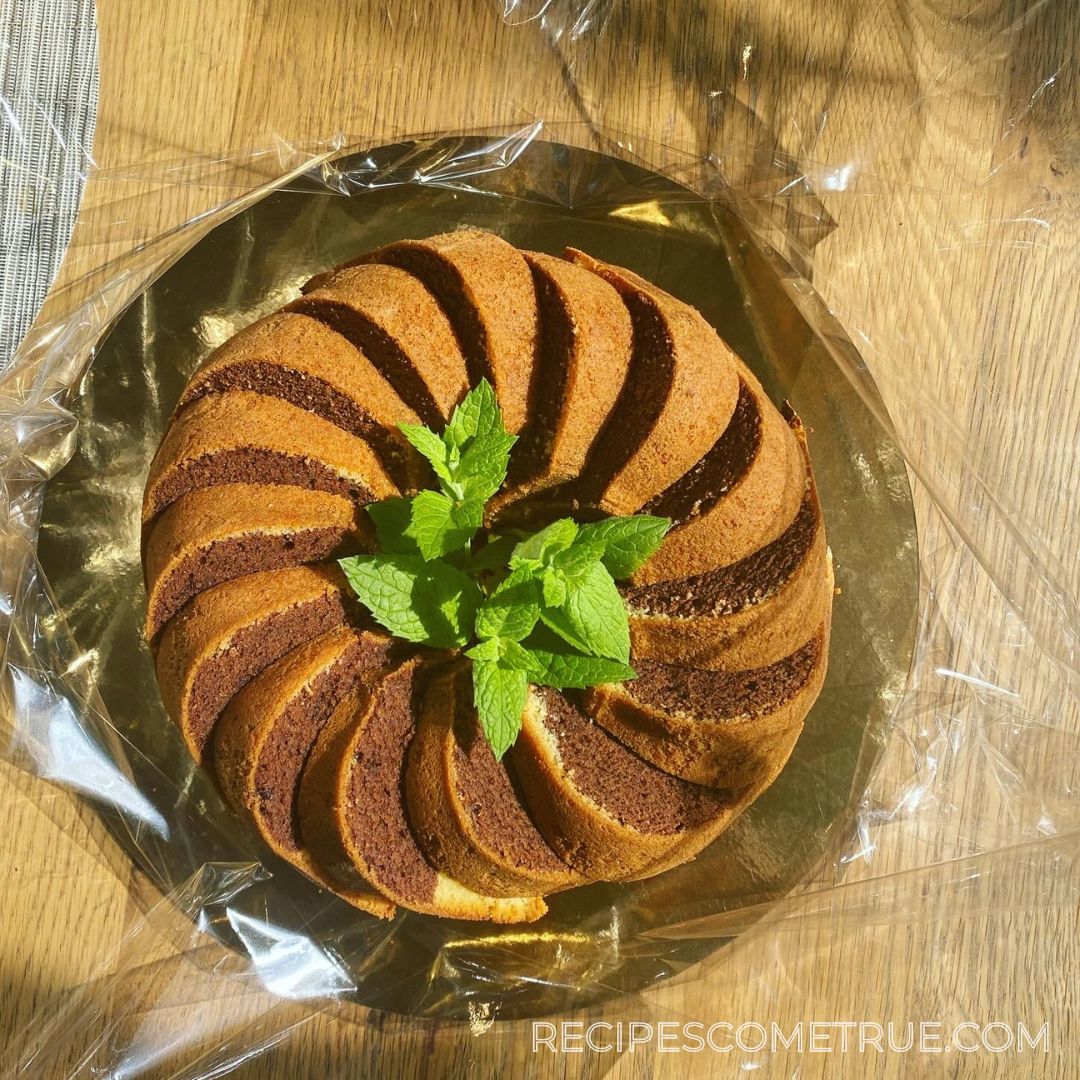
The two layers of chocolate and vanilla cake and the bundt shape make the cake look gorgeous, so it is very popular as a cake stall item or as a gift.
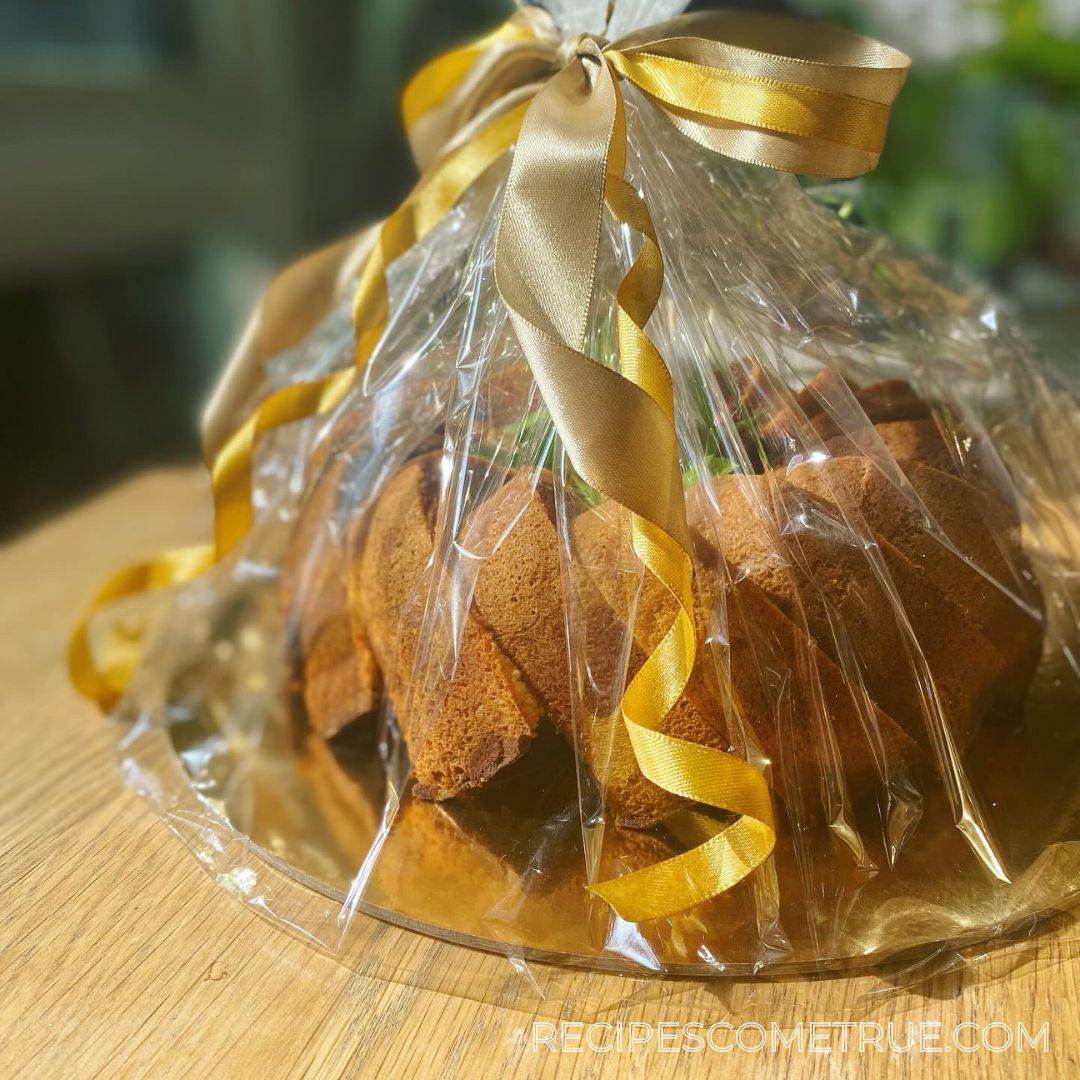
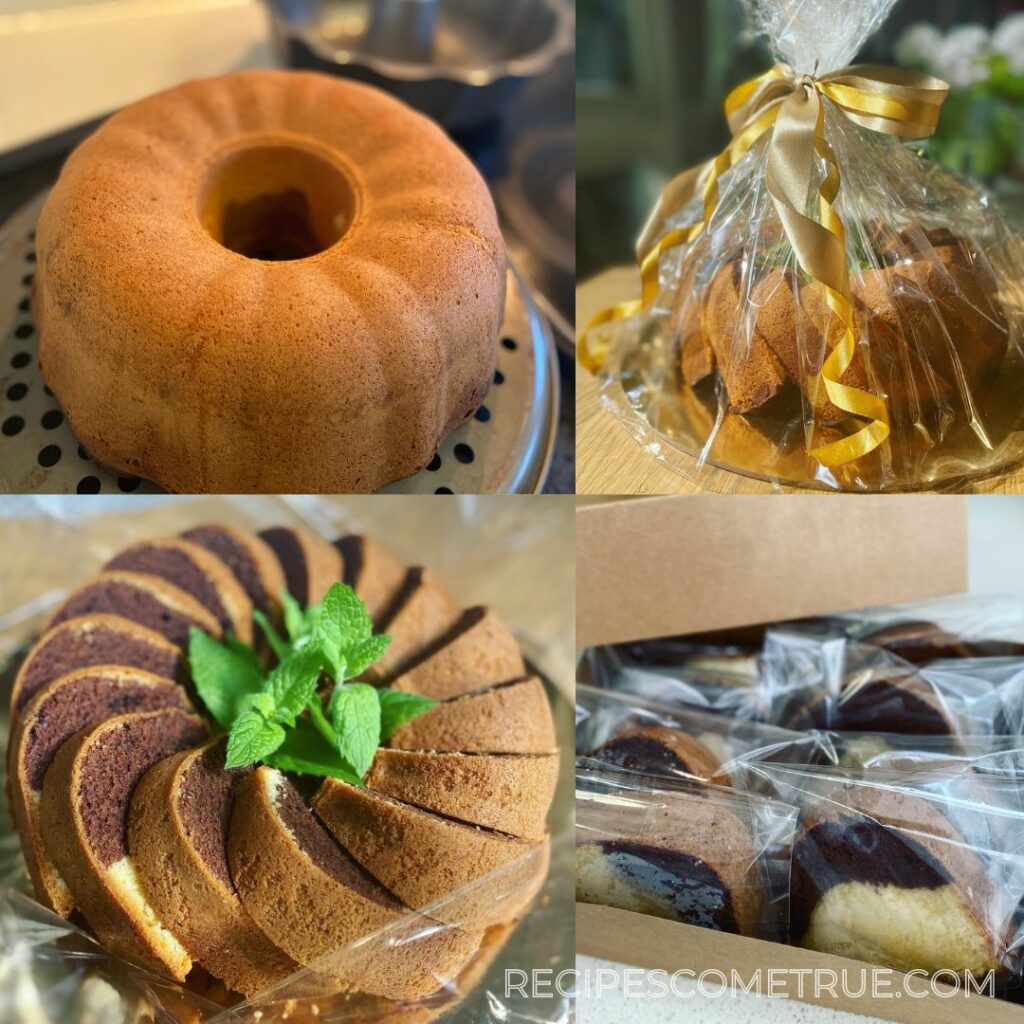
For a cake stall, these cakes are gorgeous when wrapped whole, or when sliced and wrapped in small pieces, easy to sell!
This recipe is a butter cake without yeast dough. But note that if you use a kugelhopf tin, similar to this bundt tin, a regular kugelhopf uses yeast dough (with raisins, similar to Italian panettone). A chocolate kugelhopf has a pastry-like quality a little like chocolate babka.
Did you make this recipe?
Please let me know how it turned out for you! Leave a comment below and tag @recipescometrue on Instagram and hashtag it #recipescometrue.
German Marble Butter Cake (Marmorkuchen)
Ingredients
- 300 g plain flour (or self-raising flour (a.k.a. self-rising flour))
- 15 g baking powder (unnecessary if you’re using self-raising flour)
- 1 pinch salt (option) (unnecessary if you’re using self-raising flour)
- 400 g caster sugar
- 300 g sour cream (you can use a 300ml pack – roughly 286g- not a problem!)
- 6 large eggs
- 105 g unsalted butter
- 200 g dark chocolate (roughly chopped or buttons)
Instructions
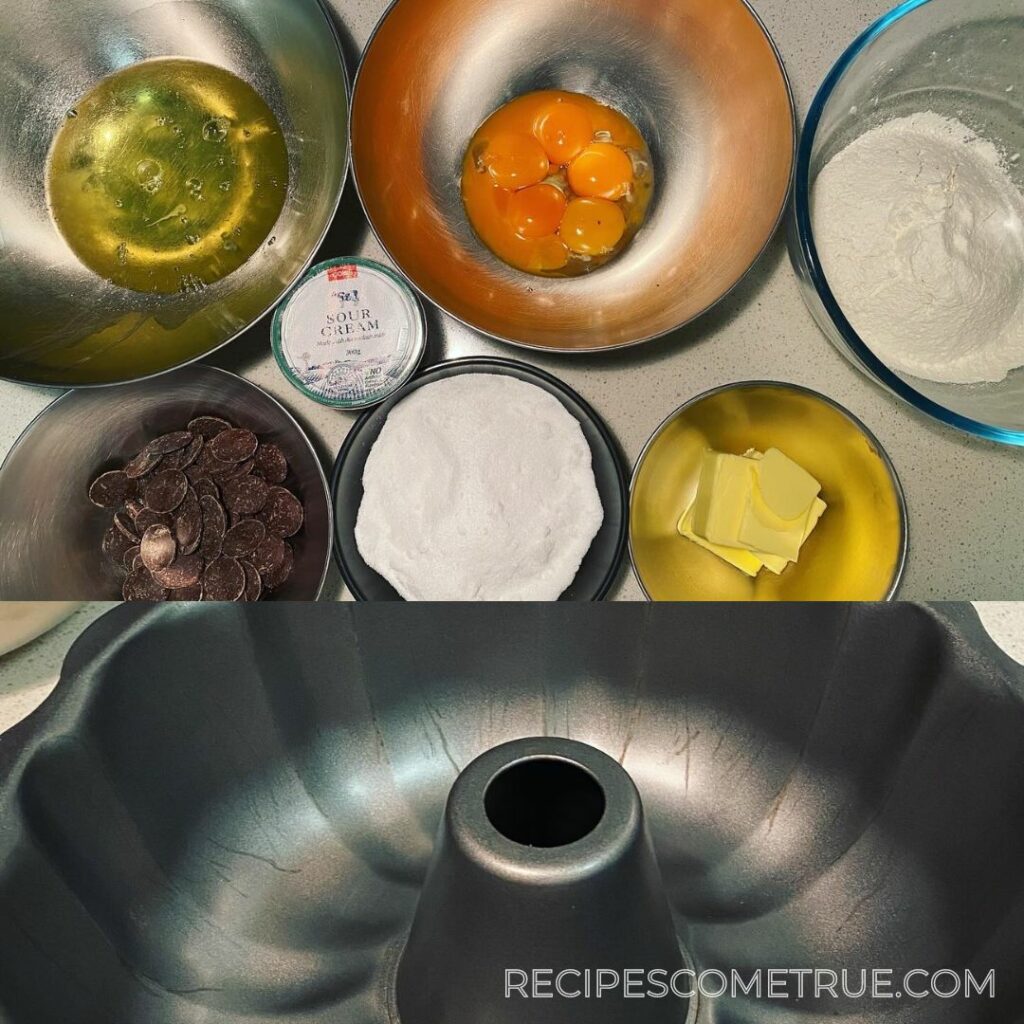
- Prepare all your ingredients in the required quantities.

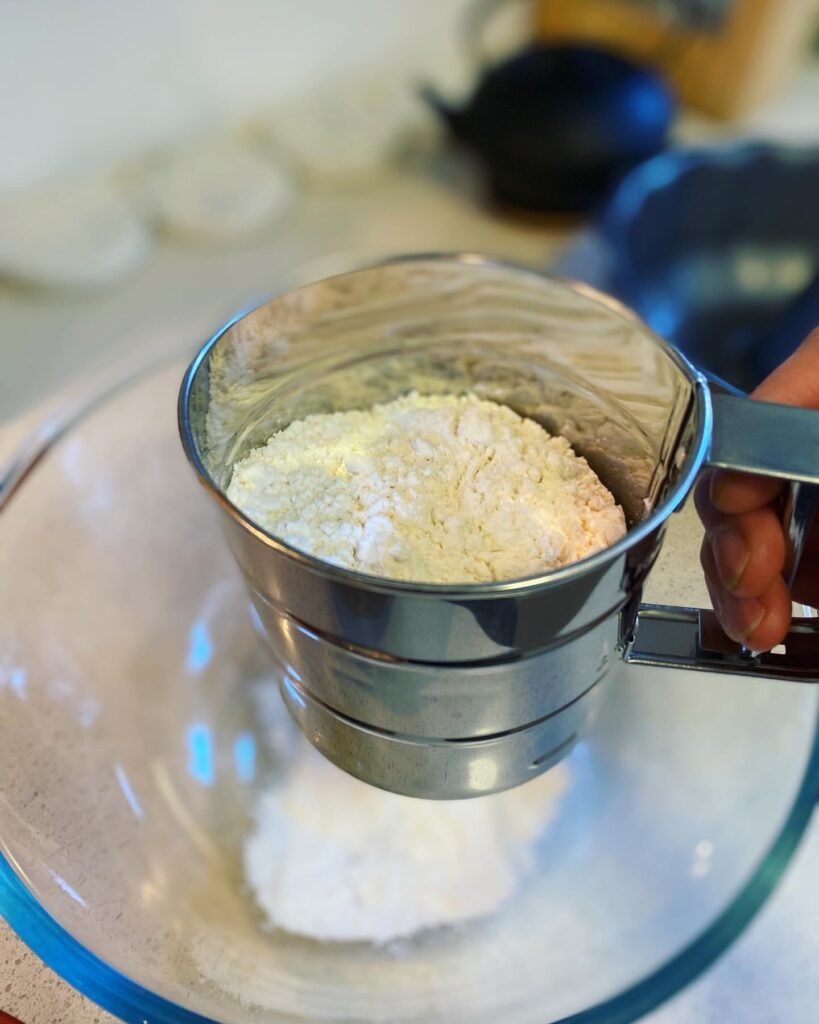
- In a mixing bowl, sift together the flour, baking powder, and salt, and set aside.Tip: You can also use self-raising (a.k.a. self-rising) flour—300g self-raising flour without the salt and baking powder but sift it once as well.
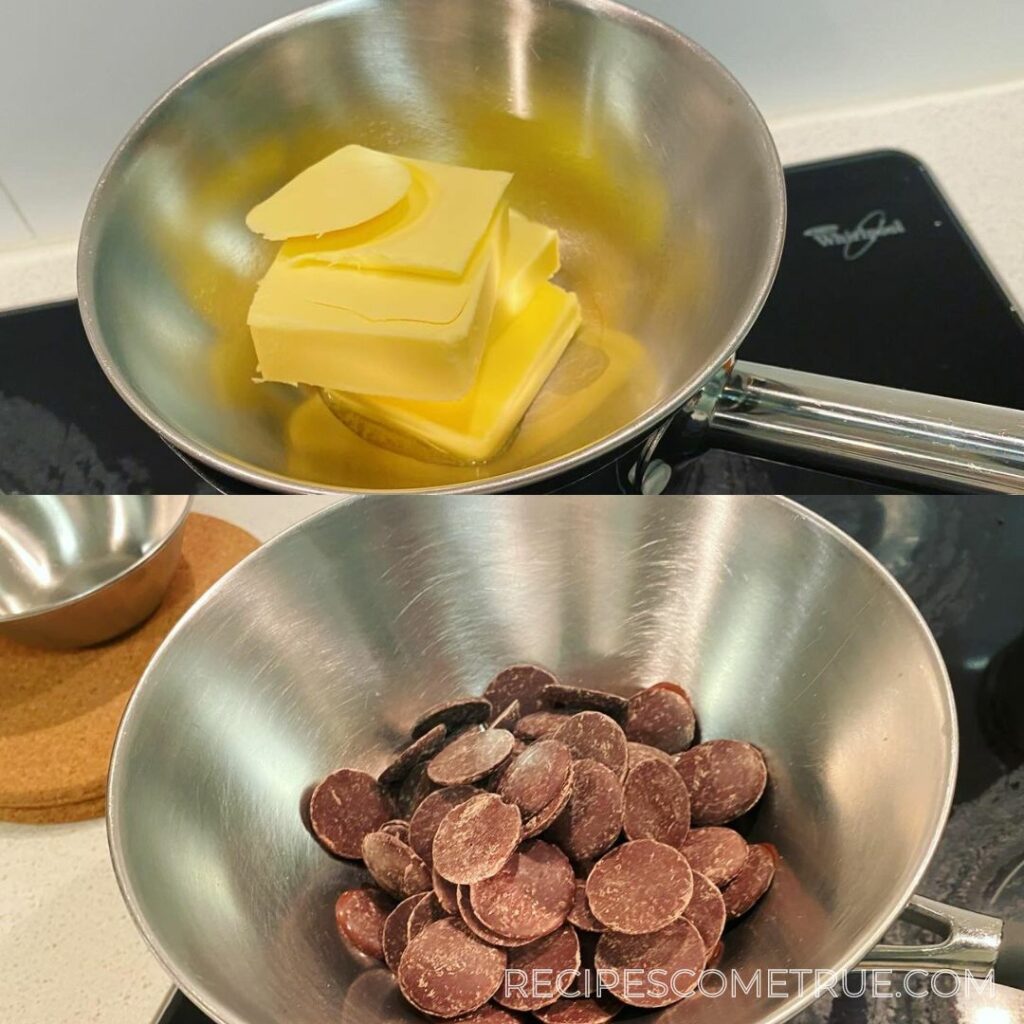
- Put the butter (100g) and dark chocolate in separate small bowls over saucepans of simmering water and let them melt over very low heat.Tip: Don’t add too much water into the saucepans. If water gets into the ingredients in the bowls on top, especially the chocolate, the ingredients will become unusable. But if it’s just a drop or two, use a spoon to remove the water.
- Preheat your oven to 200°C.Tip: Mine’s electric, but gas ovens usually have a slightly lower heat, so 220°C may be just right.
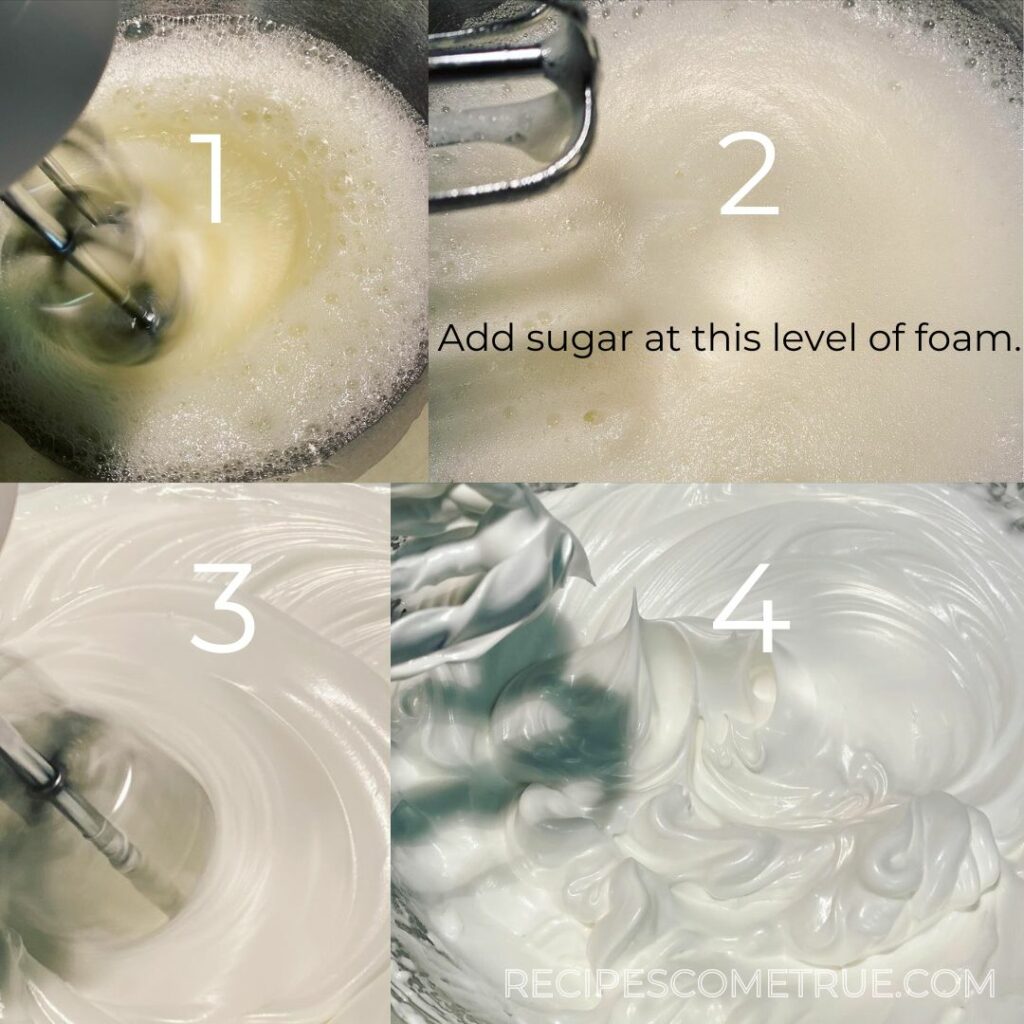
- Beat the egg whites in a bowl for 1-2 minutes until frothy, then gradually add half (200 g) the amount of sugar, beating until stiff peaks start to form, and then set the bowl aside.Tip: If you add the sugar before beating to a white consistency, it will take longer to reach the consistency of meringue.Tip: The mixer head used here can be used directly in the next process of mixing the egg yolk without washing. But if you use the mixer with the egg yolk first, you’ll have to wash the mixer head before whisking the egg whites.
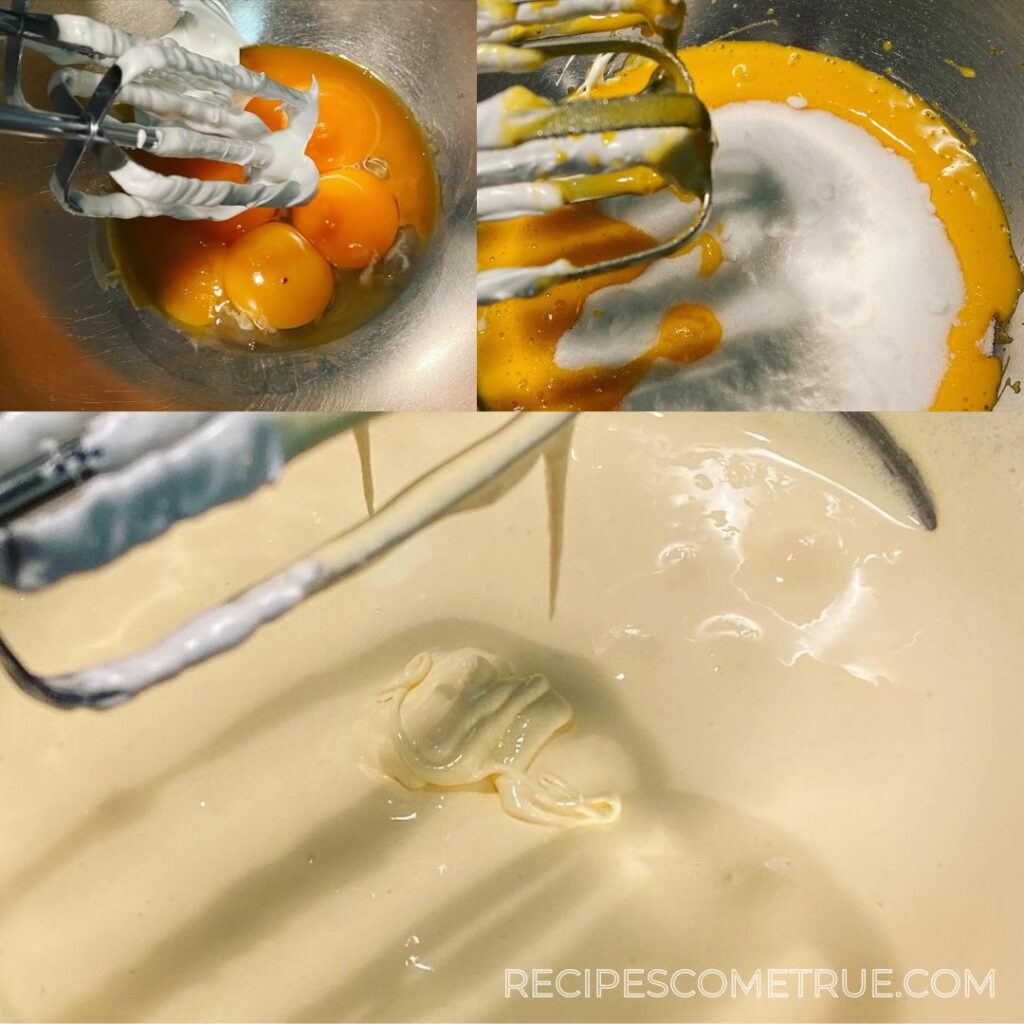
- Add the other half (200 g) of the sugar to the egg yolk bowl and mix until white and creamy.
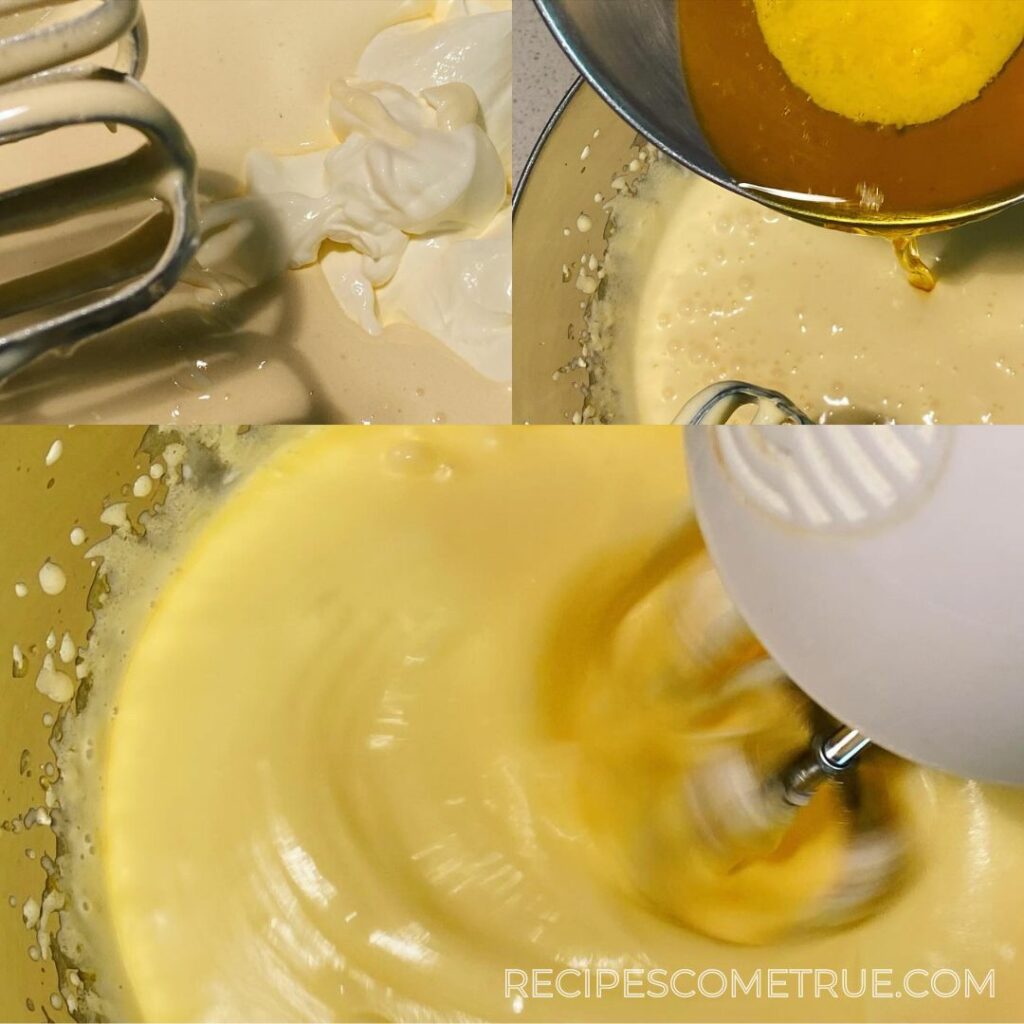
- Add the sour cream, and then melted butter and mix further.
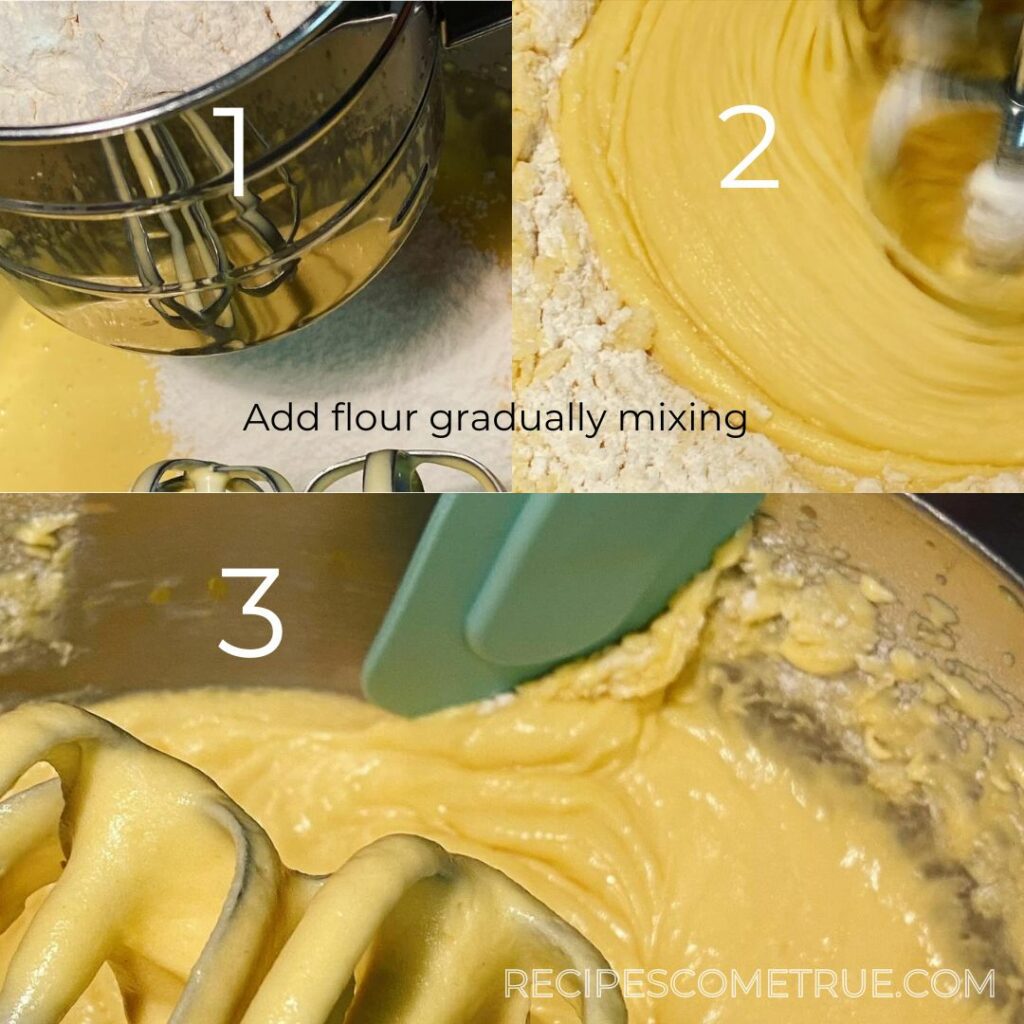
- Gradually add the sifted flour to the egg yolk bowl and beat until well combined.Tip: I use an electric whisk to mix it in as it is.
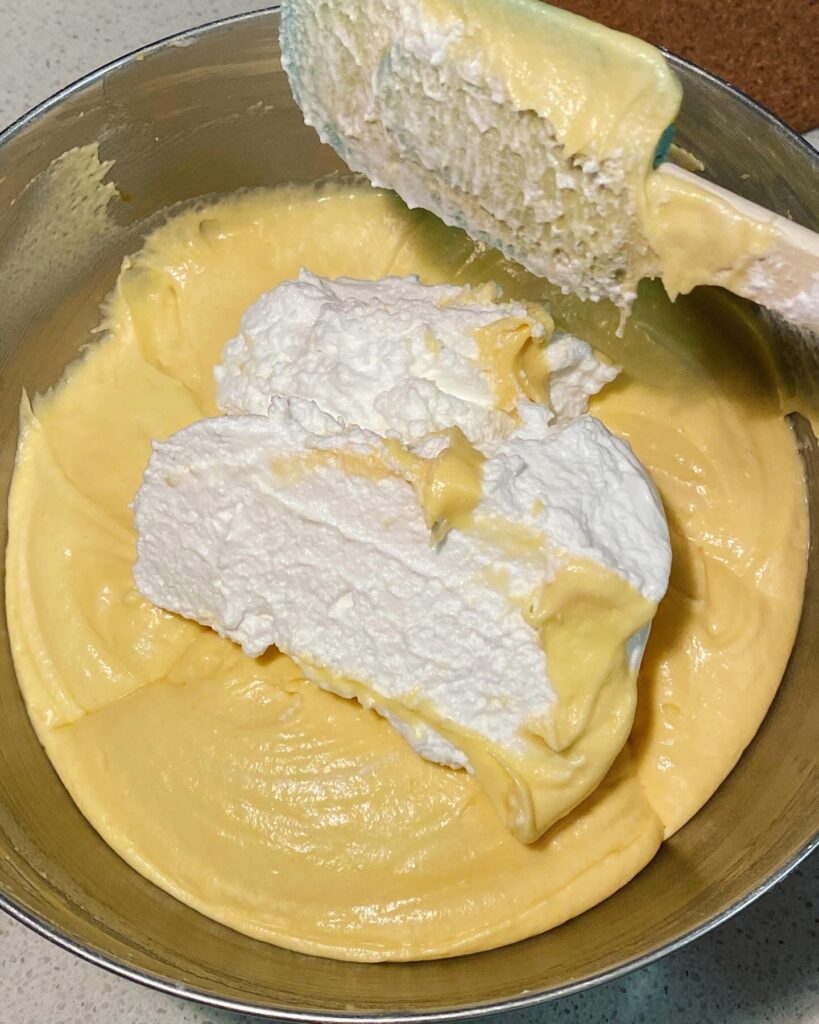
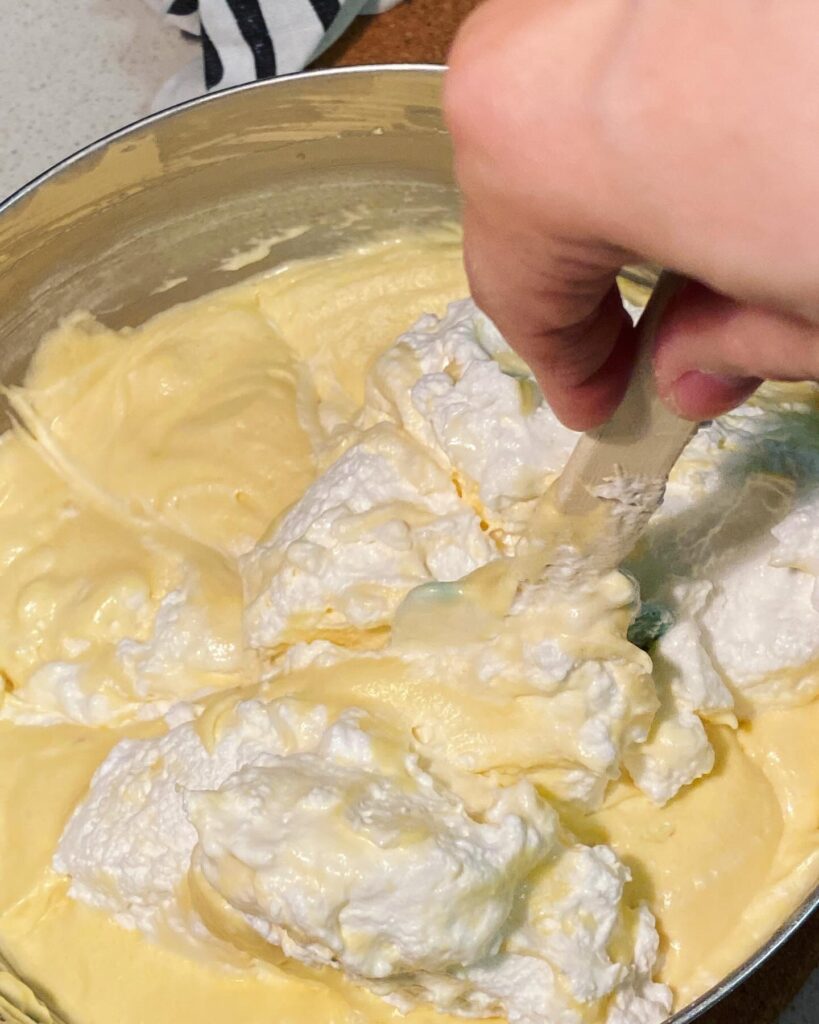
- Add 1/3 of the meringue to the egg yolk bowl and mix roughly with a spatula.
- Add another 1/3 of the meringue and mix gently.
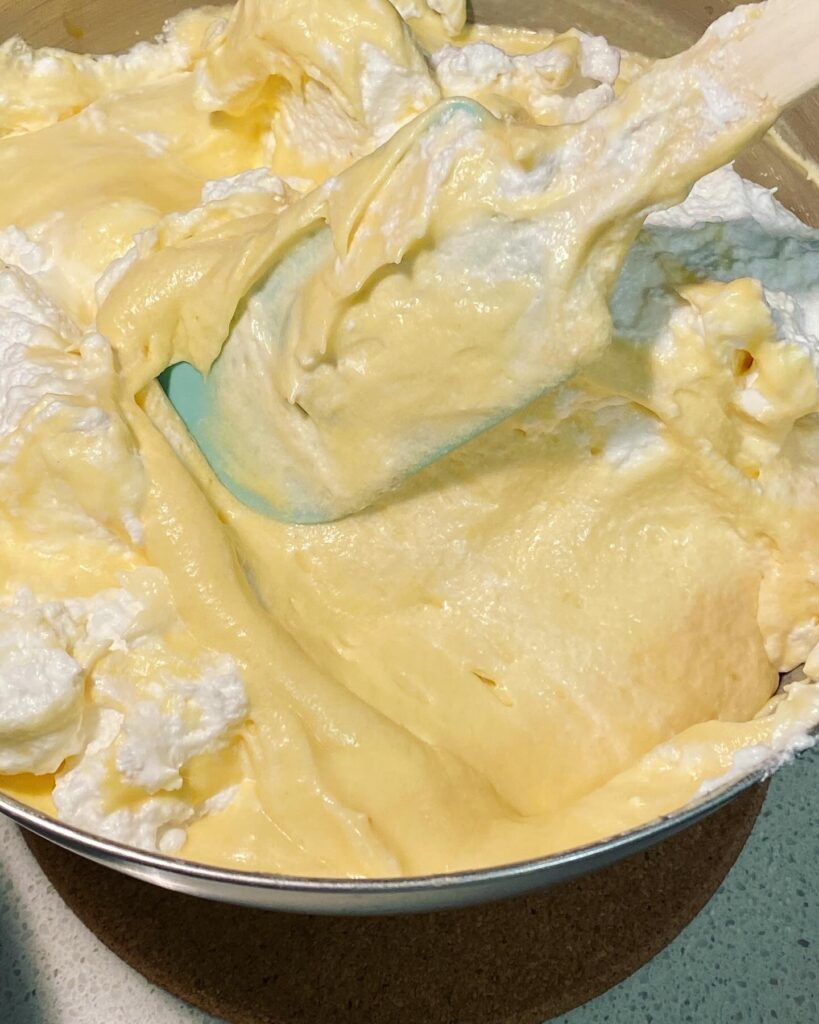
- Add the remaining 1/3 of the meringue and fold together until combined being careful not to overmix.Tip: The key is to mix carefully folding with a spatula. You don’t want to break up the meringue bubbles too much. But at the same time the mix shouldn’t have large clumps of meringue, as this’ll leave white bits of meringue when baked.
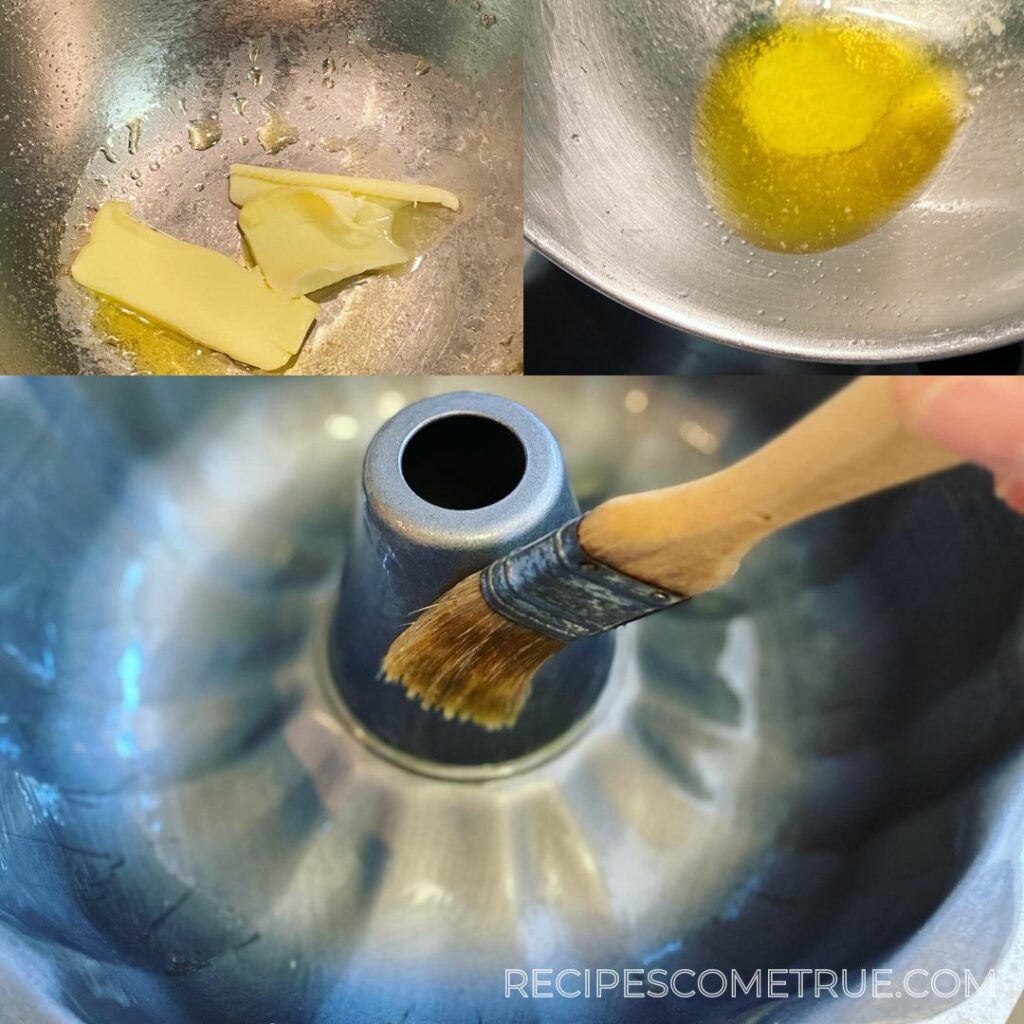
- Now brush the inside of the bundt tin with extra melted butter (about 5g).Tip: If you don’t have a brush, pour in the butter and spread it evenly with your fingers or use disposable gloves or baking paper.Tip: The key is to brush the butter onto the inside of the bundt tin just before pouring the mixture. This’ll ensure that the cake comes cleanly out of the tin when baked.
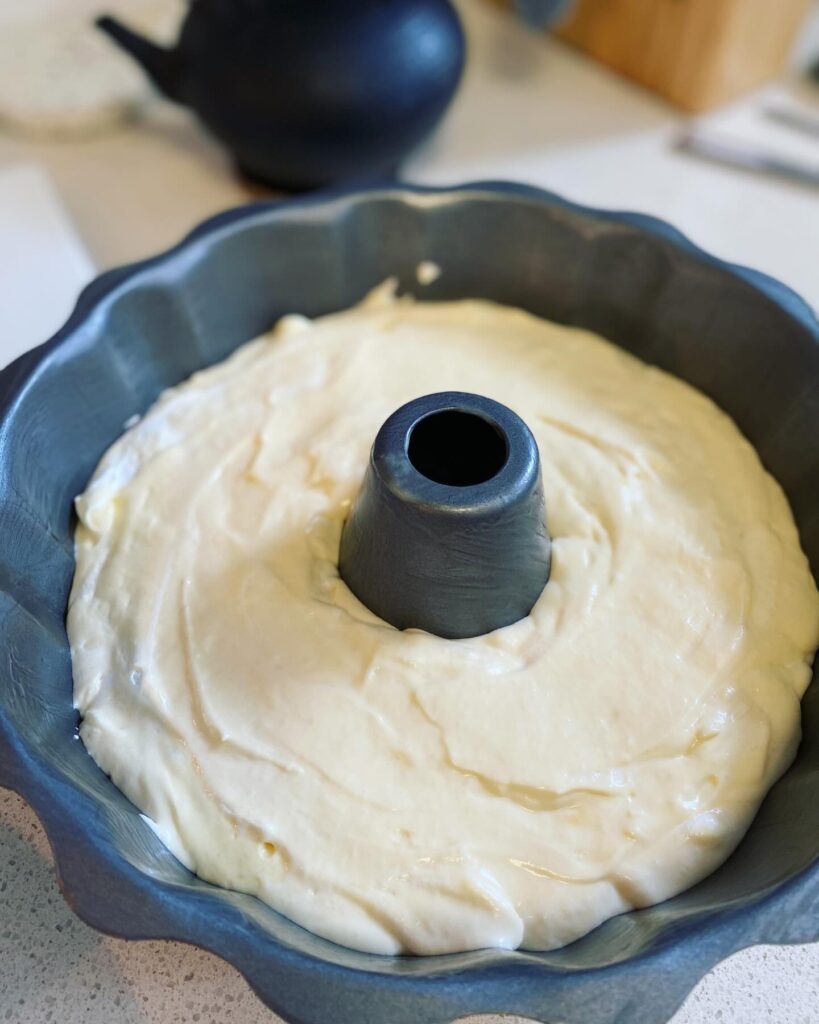
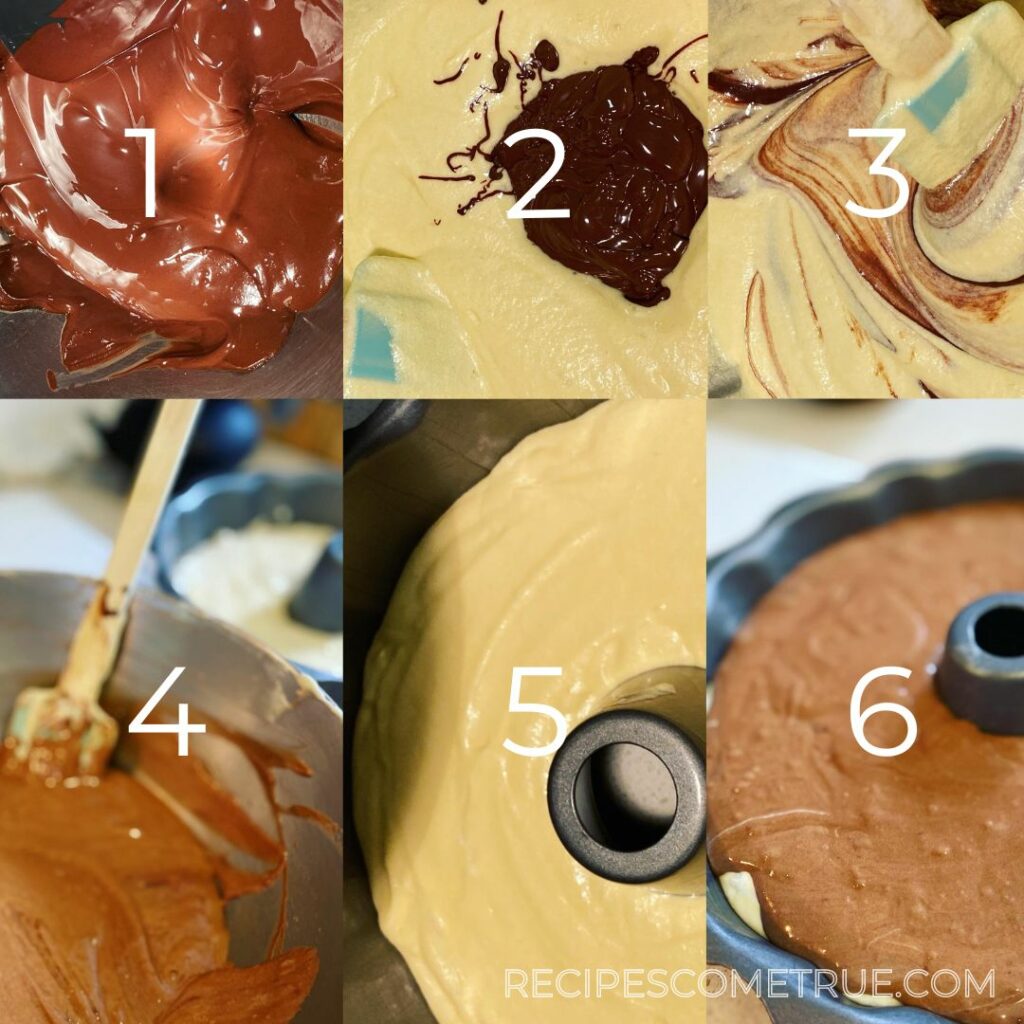
- Pour 2/3 of the mixture into the bundt tin.
- Add the melted dark chocolate to the remaining 1/3 of the mixture, mix well, and pour into the bundt tin.Tip: At this point, you can swirl the mixture using a butter knife or chopstick, gently moving through it once or twice to marble the chocolate and vanilla. Although I prefer not to do this.
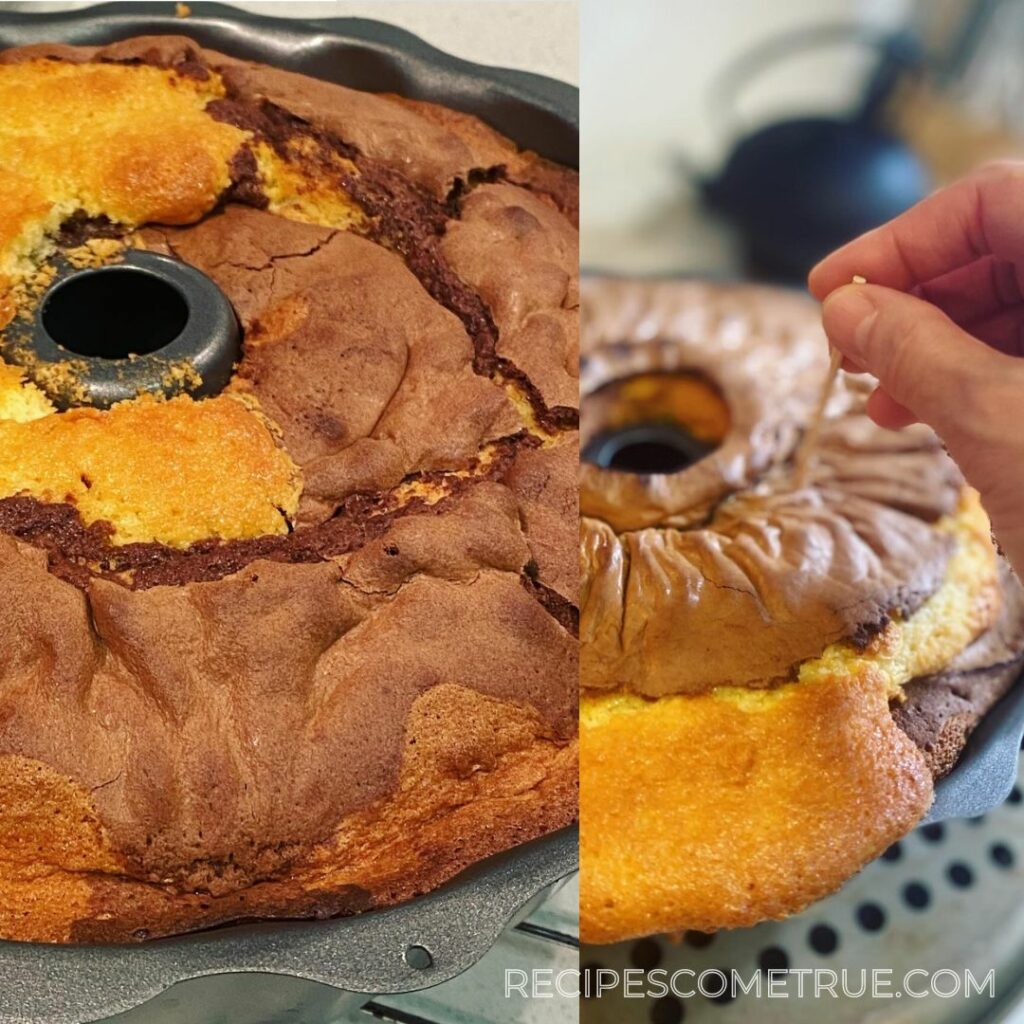
- Bake in a preheated oven at 200°C for 8 minutes to set the surface.Tip: Placing a tray underneath will keep the oven clean if the mixture overflows.
- Then reduce the oven temperature to 150°C (about 170°C in a gas oven) and rotate the tin 180° once to ensure even baking. Continue baking for 50 minutes, rotating the tin two or three times during the process.Tip: Bake until a bamboo skewer inserted into the cake comes out clean.
- Once out of the oven, leave to cool for at least 10 minutes before taking it out of the bundt tin.Tip: I’m usually impatient and turn it over after 10 minutes. But it’s safer to wait 15-20 minutes to ensure it comes out cleanly.
- Once cooled, cut the cake into slices of your desired thickness for serving.Tip: I usually keep a couple of slices for home and arrange the rest on a cake stand in a circle with a small gap between each slice. Knock them down a little like dominoes to show off the chocolate and vanilla swirls. Wrap any leftovers in clear wrapping or lolly bags for gifting.
Notes
-
- I have made this cake using eggs of various sizes and weights. Bear in mind though that yolk volumes remain fairly similar—the differences in weight and size are really the egg white and shell.
- Using larger egg whites (from 700g and 800g packs), the cake held together better when sliced.
- With smaller egg whites (from a 600g pack), the cake had a richer, moister texture, giving the cake a more intense flavour profile.
- Although the eggs used, how they’re whisked and folded into the mixture might affect your results slightly, I don’t believe you’ll met with any major mishaps!
- For reference:
- a single egg from a 12-pack weighing 600g contains approximately 30g of egg white and 17g of yolk;
- a single egg from a 12-pack weighing 700g contains approximately 35g of egg white and 17.3g of yolk; and
- a single egg from a 12-pack weighing 800g contains approximately 40g of egg white and 17.3g of yolk.
Love this cake!
Thank you Richard!